

July 9 – August 28, 2026
Opening reception:
Thursday, July 9, 2026
6:00 to 8:00 PM
Curated by Joseph R. Wolin
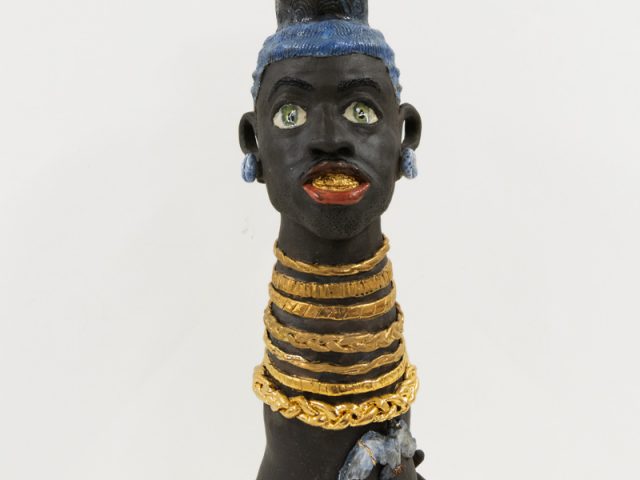
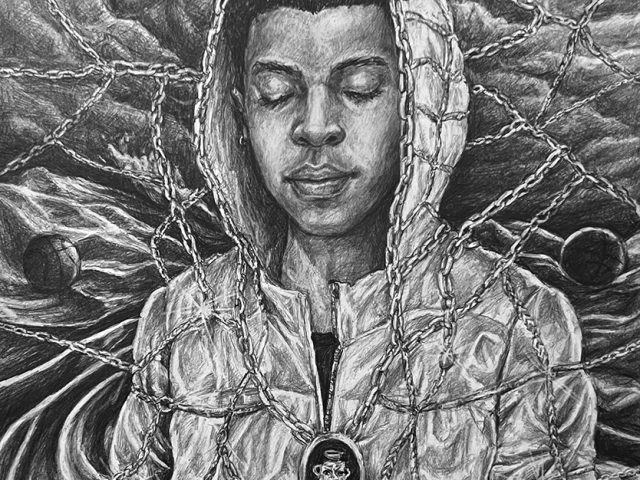
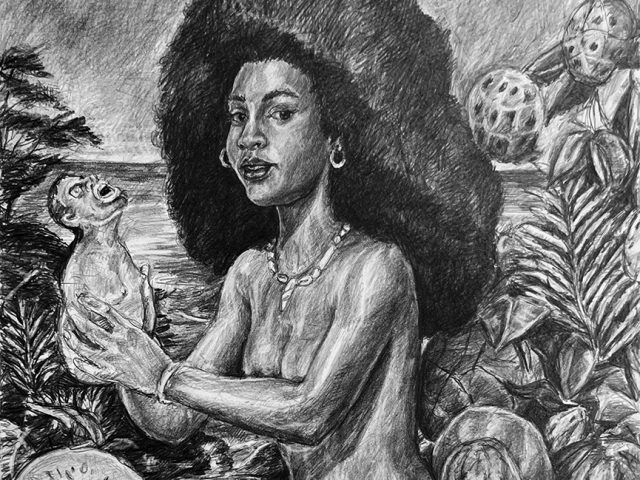
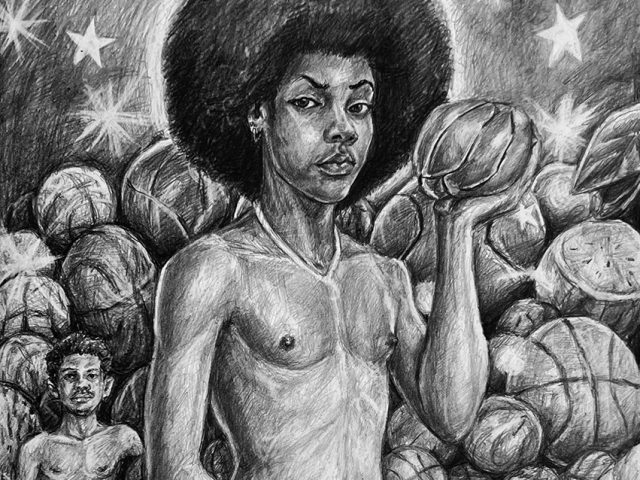
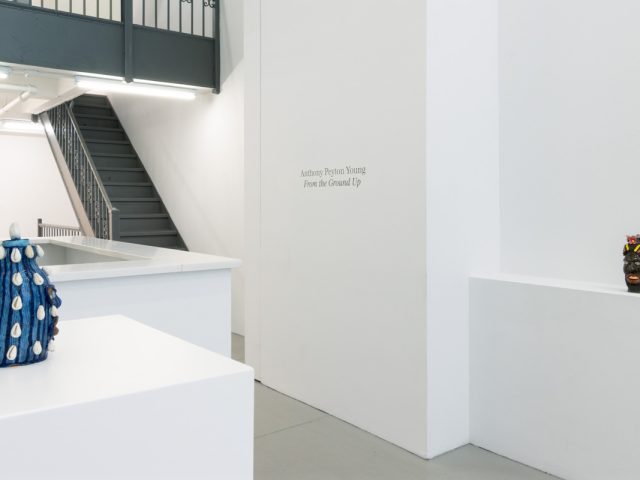
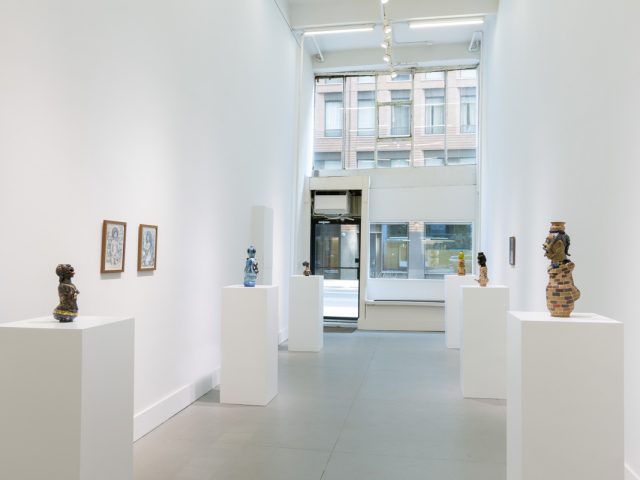
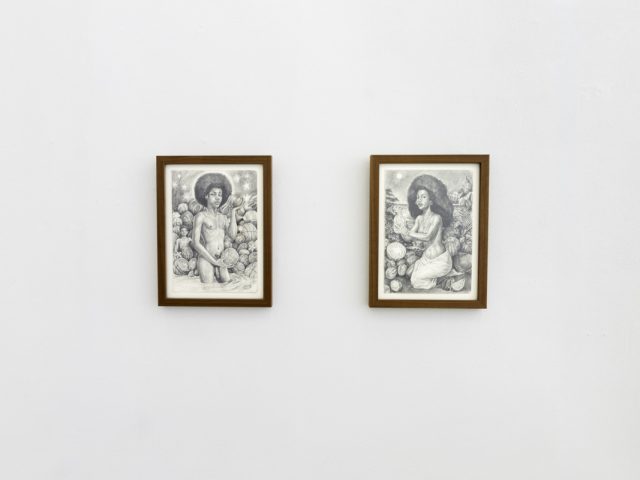
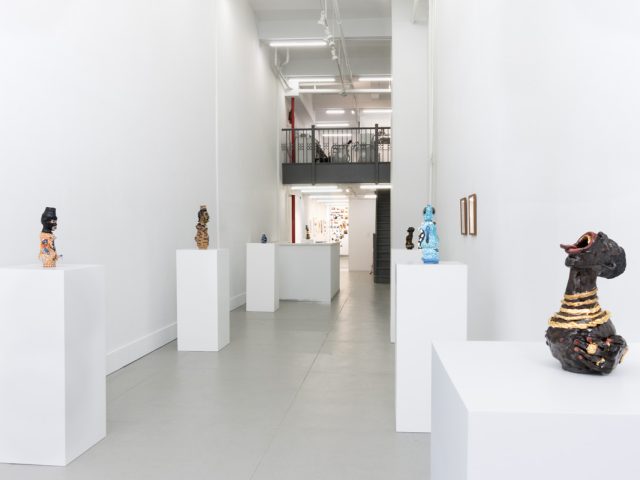
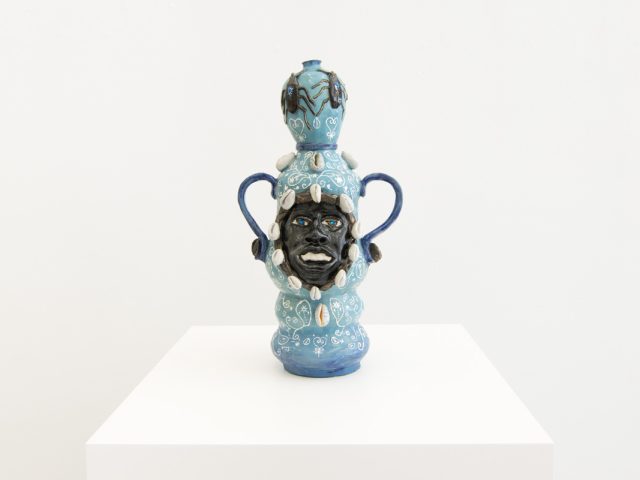
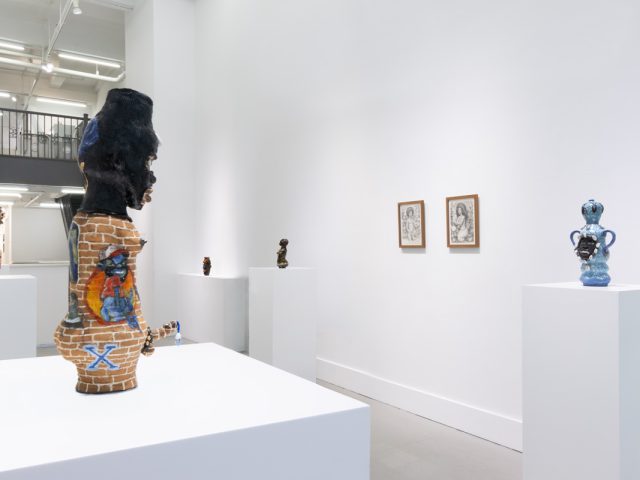
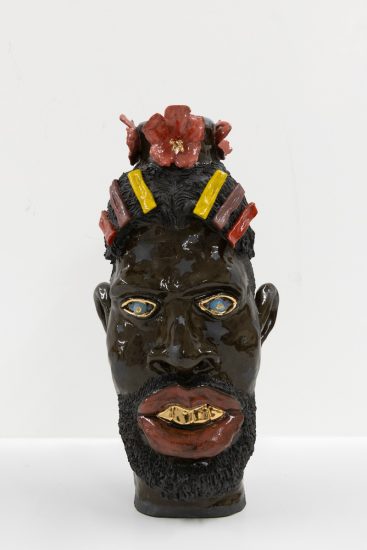
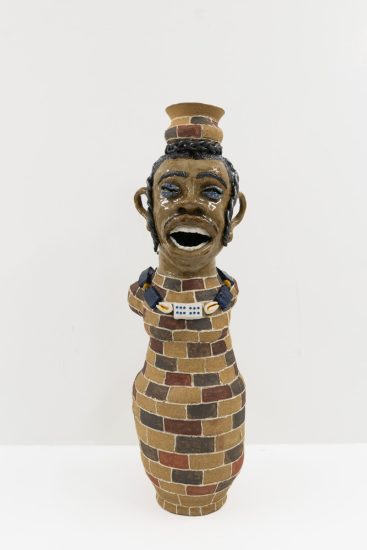
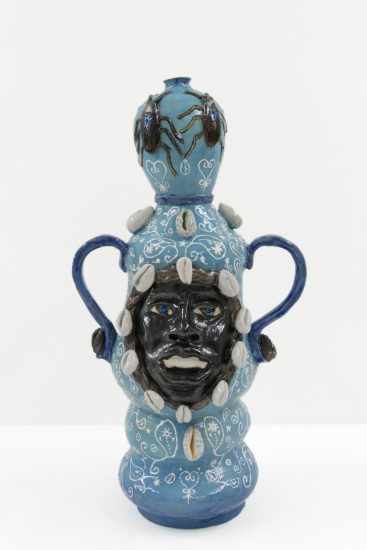
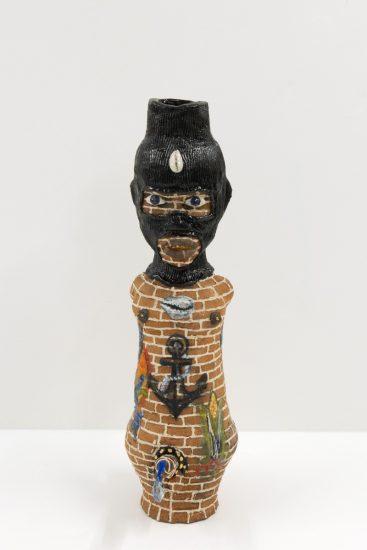
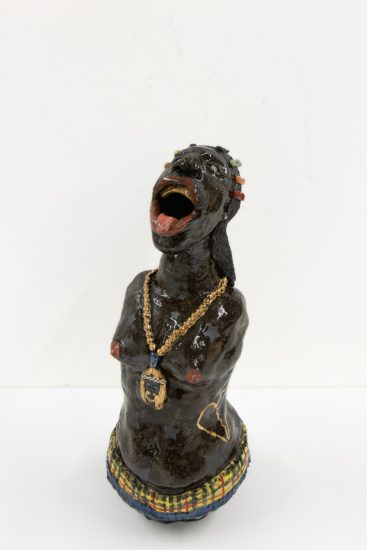
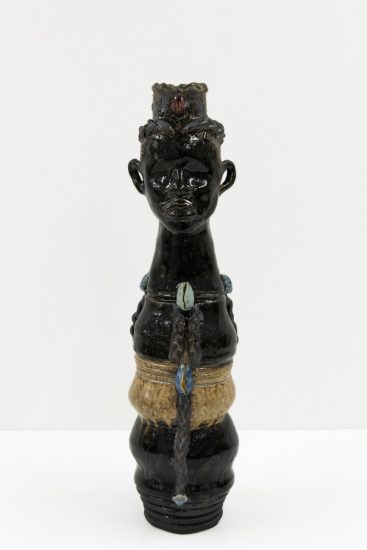
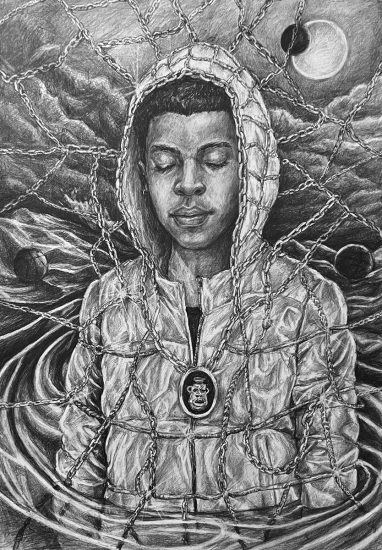
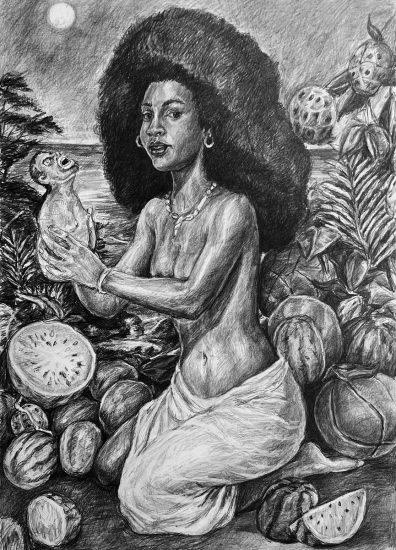
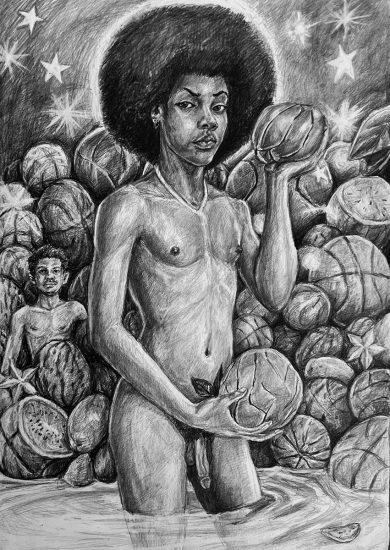
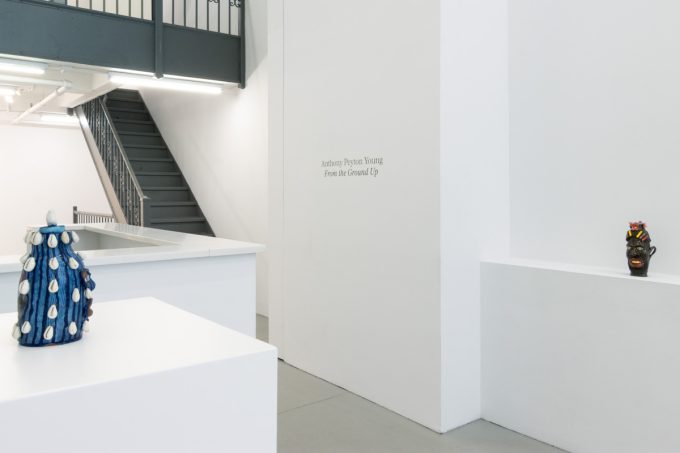
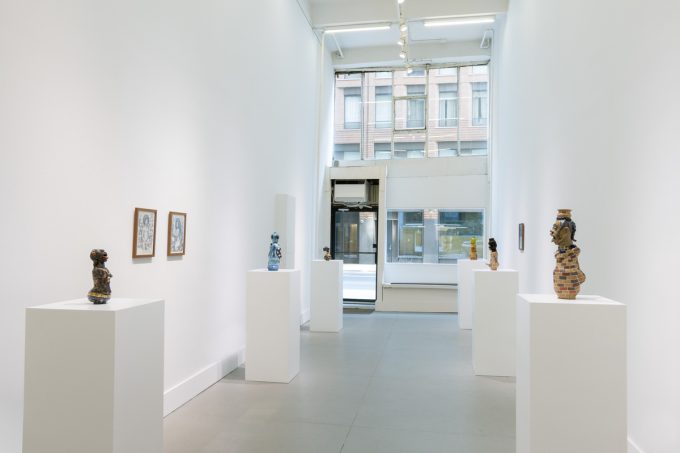
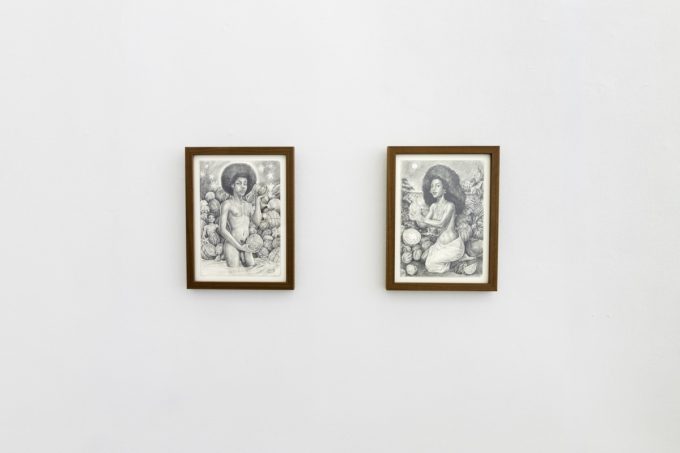
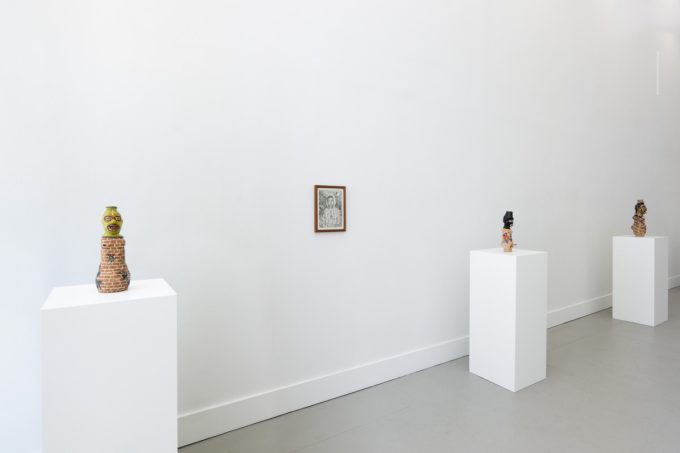
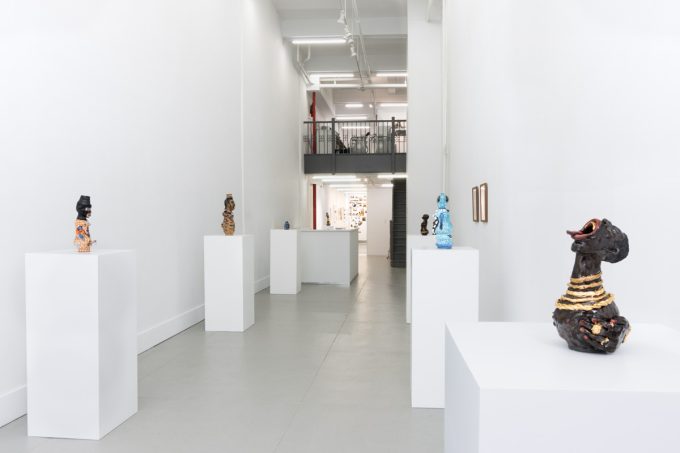
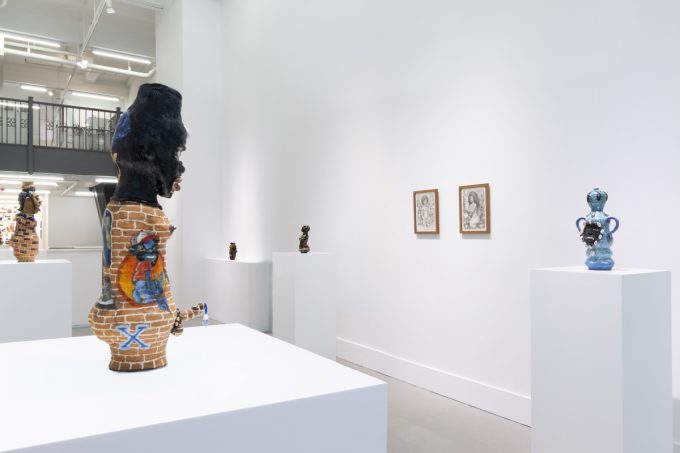
CLAMP is proud to announce “From the Ground Up,” an exhibition of recent ceramic sculptures and drawings by Anthony Peyton Young—his second with the gallery. Merging historic Southern craft traditions and contemporary explorations of identity, Young employs humor and caricature both to dismantle received stereotypes and to explore how those same stereotypes may contribute to the formation of subjectivity.
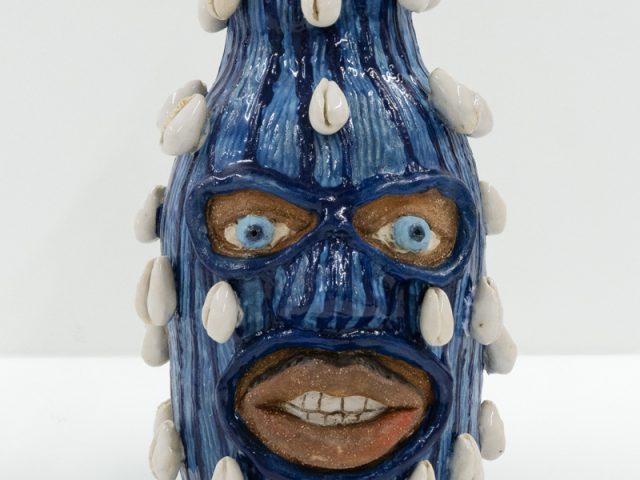
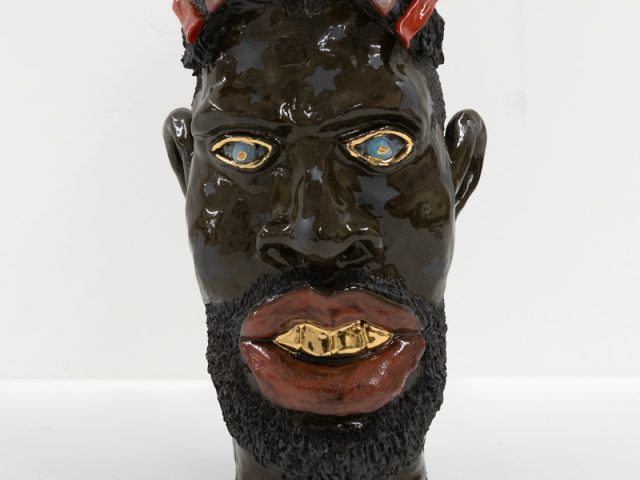
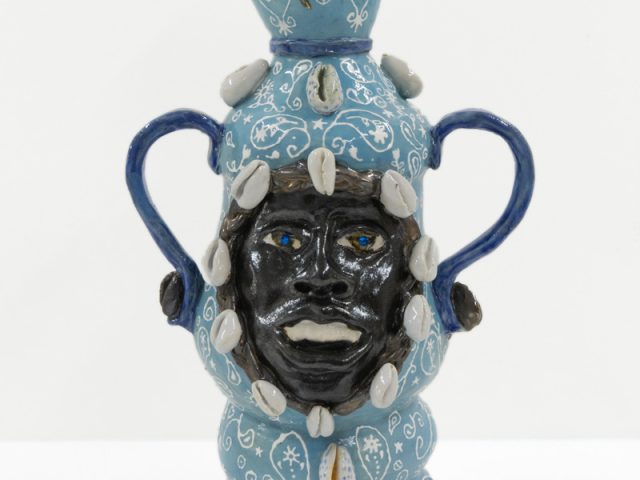
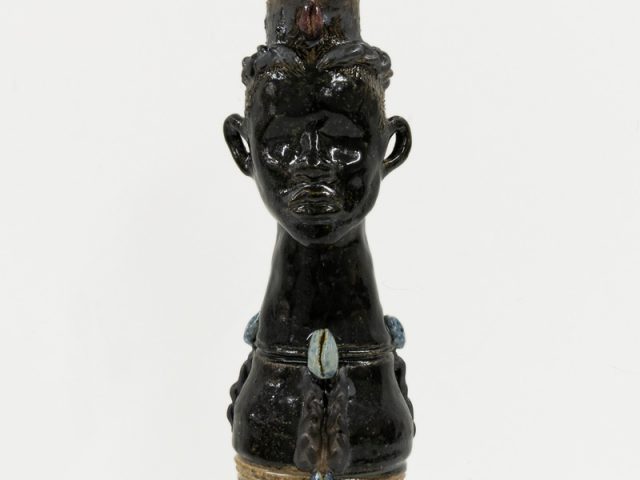
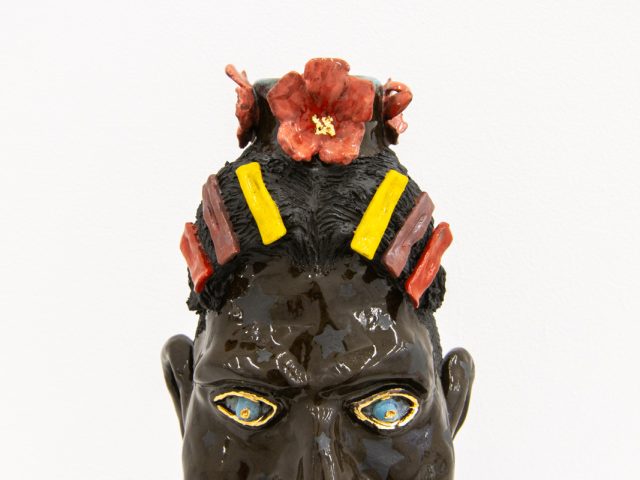
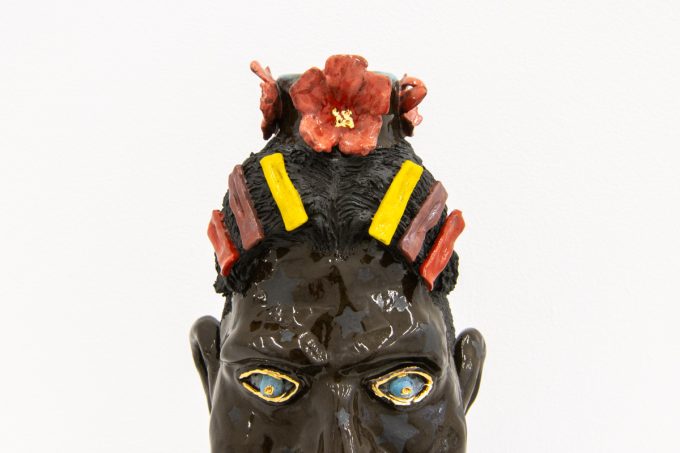
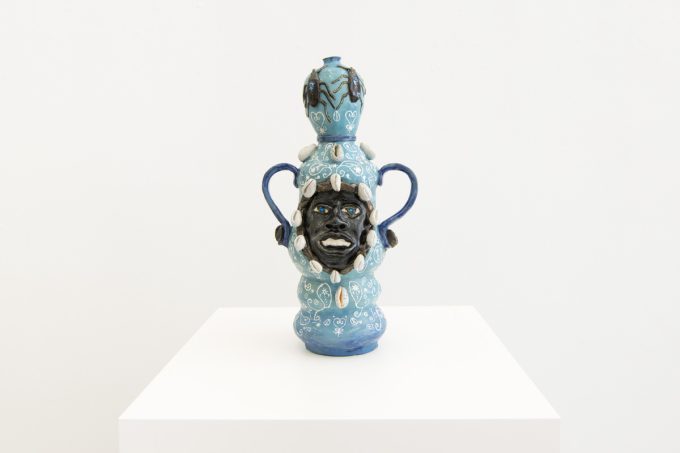
By the 1840s, a tradition arose in the Edgefield District of South Carolina of creating face jugs, also known as face vessels or grotesque jars. These ceramic vessels in the form of human heads often bore distorted features, giving them a humorous or frightening aspect, but, for the Black artisans, probably enslaved, who made them, they almost certainly held ritual significance. Kaolin, plentiful in the area, was used for the white eyes and teeth, tracing a relationship back to Africa, where power figures were made with the same material. In addition to spiritual meanings, the effigies produced by the Black potters of the Edgefield District stand as statements of self and identity by people given little opportunity for expressing either.
Anthony Peyton Young, an artist from the American South, currently living and working again in Charleston, West Virginia, where he was born and raised, has long essayed what the critic Kobena Mercer termed “the stereotypical grotesque,” deploying racist and racialized cliches to throw light upon their pernicious effects and parody the culture that spawned them, but also to contemplate their persistence in the American unconscious and the ways in which they help shape both cultural and personal imaginaries and constructions of the self. Five years ago, he began to turn his attention to the legacy of face jugs and has since created a growing group of his own interpretations of this historic Black artform.
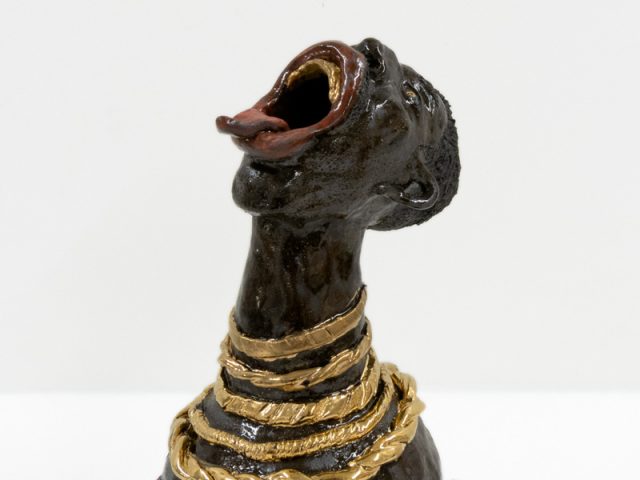
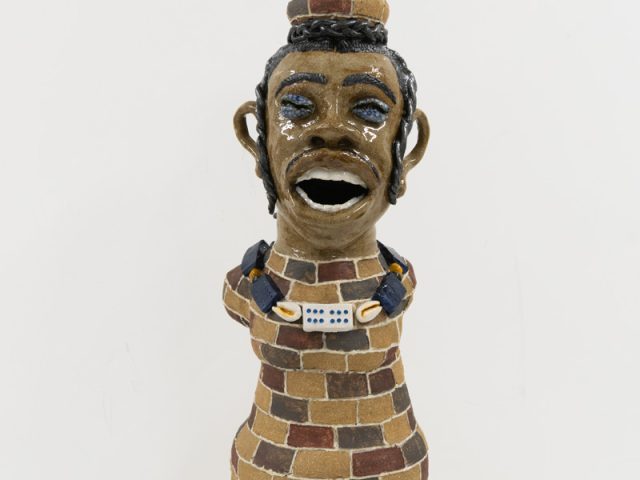
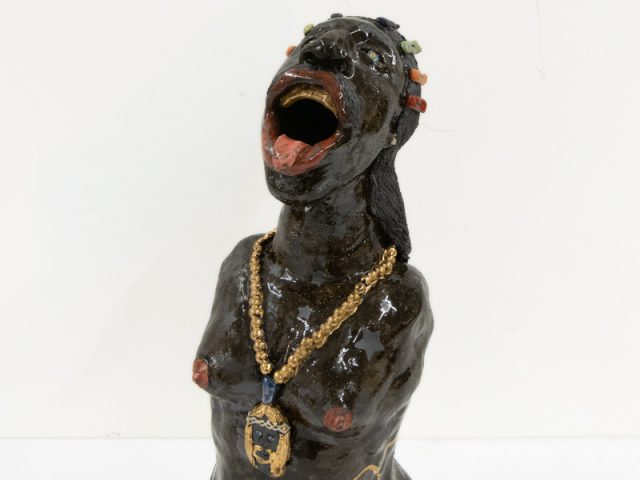
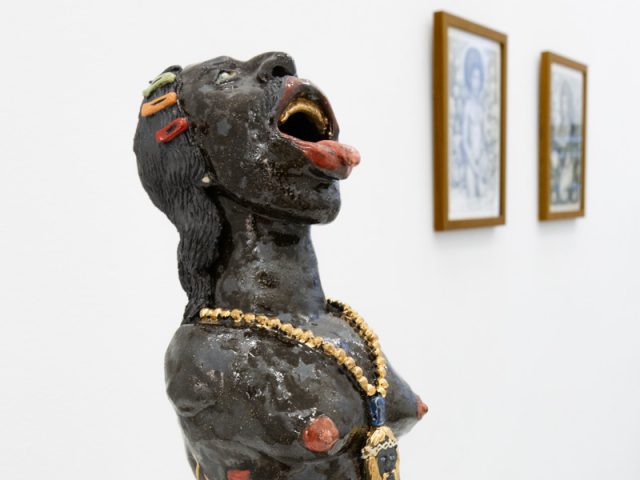
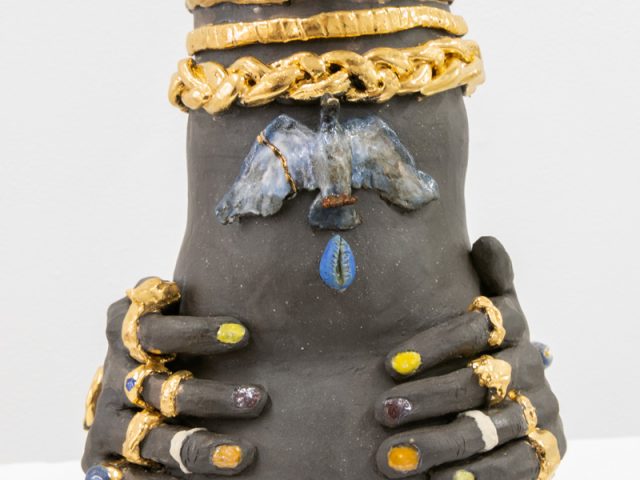
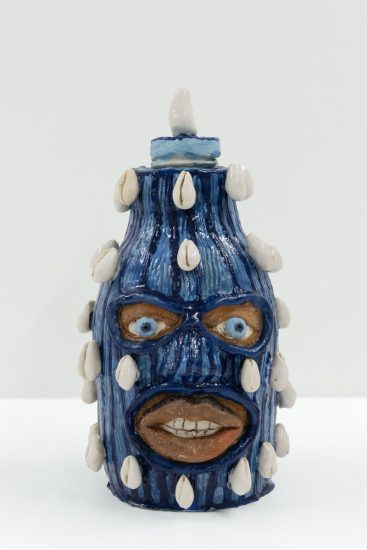
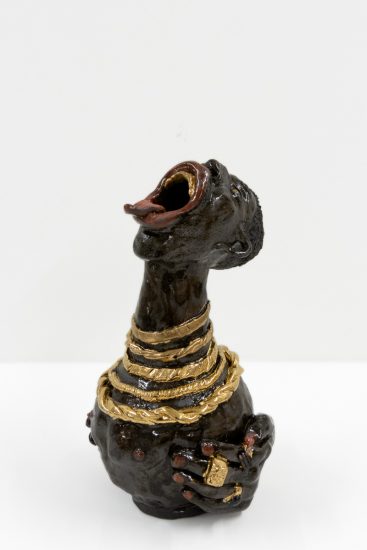
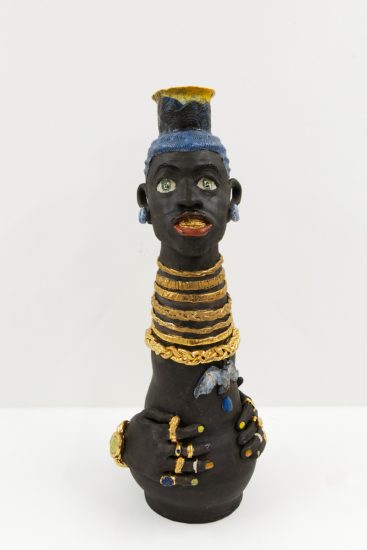
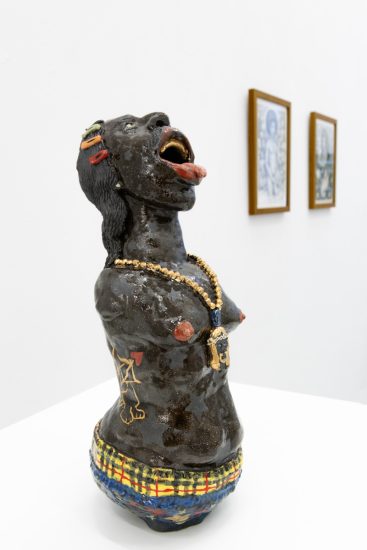
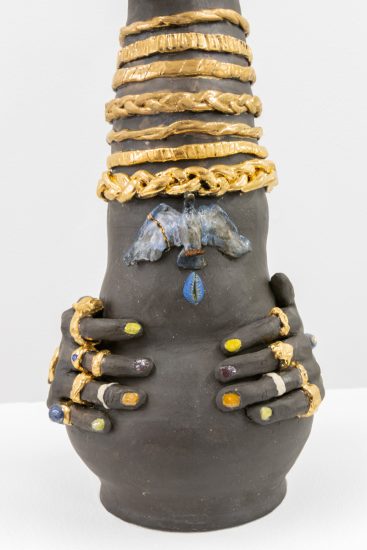
Young’s ceramic vessels, like his paintings and drawings, mine American culture, particularly representations of Blackness, to forge new considerations of how we see ourselves and each other. His figures, more fully realized than just faces, draw upon tropes we know from popular entertainment and daily life. Sagging jeans reveal the tops of plaid boxers; gold chains and grills gleam against dark skin, referring to hip-hop culture, but also to African artistic traditions, in which metals—like the nails driven into wooden Kongo figures—generate spiritual powers. The frequent appearance of cowrie shells also nods to the ancestors.
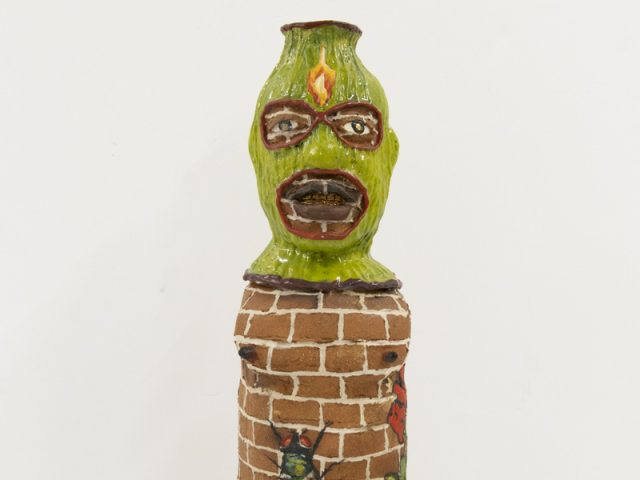
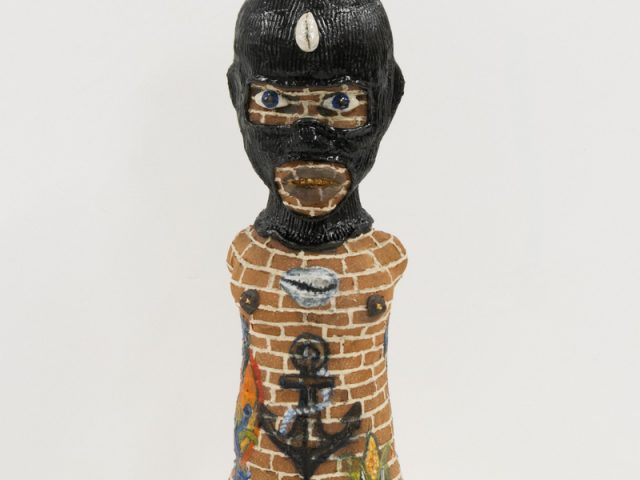
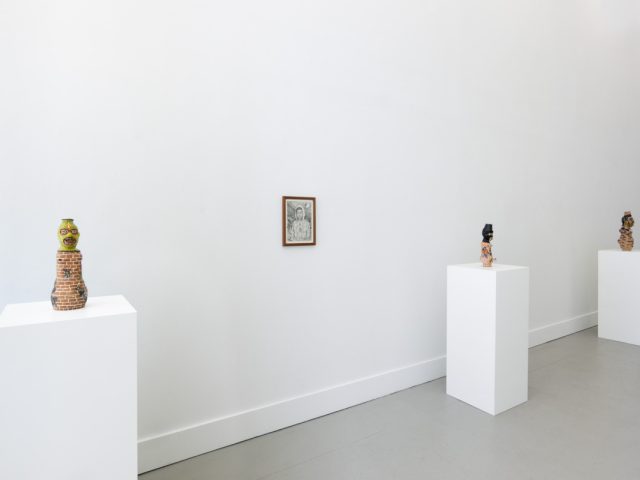
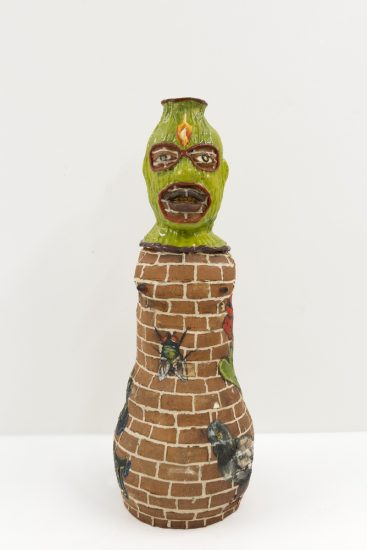
A recurring figure with a face covered by a knit balaclava with holes for eyes and mouth may evoke superheroes and ninjas, but it equally conjures Dumb Donald from the “Fat Albert” cartoons. The masks also rhyme with those worn by S&M practitioners and men on the DL in amateur gay porn. Brickwork that covers the body of several figures, sometimes graffitied and fenestrated, with windows framing kissing men or other scenes, pays homage to the paintings of Martin Wong—but possibly also to the Commodores, built bodies having been compared to brick houses for quite some time.
And the works tend towards the ribald. Nipples are freed. Penises sprout like spouts. Are those thrown-back heads with open mouths and lolling tongues breaking out into songs of uplift, cries of supplication, or the throes of ecstasy? The slightly lascivious sexuality that underlays so much pop culture, to say nothing of its place in the formation of our imaginations, finds full flower in Young’s sculpture. The artist’s inquiries into the ramifications of Blackness have always intersected with his contemplation of the homoerotic, although he is an equal-opportunity imagineer of desirable—and desiring—bodies.
As all this might suggest, Young fills his art with detail that invokes a world of references, both cultural and more idiosyncratically personal. For the artist, some vessels represent himself, but some stand in for other people in his life, including his mother. Rock doves—the wild variety of common pigeons—appear on several of the works and symbolize tenacity and self-determination. Even the color blue might suggest water, the cosmos, memory, rebirth, or the deep black of skin. But it also relates to haint blue, the indigo-derived hue used in the South, originally by the Gullah, apotropaically on domestic ceilings, doors, and windows.
The exhibition’s title, “From the Ground Up,” harks back to “Mortal Man,” a 2015 song by Kendrick Lamar that creatively samples an interview with Tupac Shakur from 1994. In it, Shakur speaks of the ground opening to swallow evil, but also as a symbol for the poor. “The poor people is gonna open up this whole world,” he says, “And swallow up the rich people.” The exhibition title’s overt resonance with the grassroots erecting of something on a solid foundation, a by-the-bootstraps sort of echo of self-betterment, hides another, politically charged connotation of dark, epic justice.
Replete with meaning that can be widely recognizable, culturally specific, and deeply personal all at once, Young’s ceramics are power figures that reveal their secrets slowly. He invests them with associations and we may add others, but these updates of an art form once produced by enslaved Black potters are always vessels, waiting to be filled.
Joseph R. Wolin is a critic and curator of contemporary art based in New York. He teaches in the MFA Photography program at Parsons School of Design, The New School. He is the author of more than 240 art exhibition reviews for Time Out New York since 2006, and has also written for The New Yorker, Canadian Art, and Modern Painters. He was the Art Critic in Residence at the Bronx Museum in 2012–13.